01 / The problem
Challenge
A marketplace needs a coherent domain model that supports many actors, operational approvals, inventory, fulfillment, and evolving product surfaces.
02 / System view
Architecture at a glance
A simplified, public-safe model. Select a layer to inspect its responsibility.
Selected layer
Catalog
Products, variants, SKUs, brands, categories, and attributes.

02.5 / Product surface
From architecture to experience
An original public-safe interface illustration—not a production screenshot or real catalog data.
Authentic brands / trusted sellers
Product discovery with confidence.
Conceptual interface showing how product detail, seller trust, availability, and checkout intent can meet in one focused surface.
02.6 / Product evidence
Seller operations in the real product
Approved screens from Nepfa’s Seller Hub, showing how the marketplace extends beyond the customer storefront.
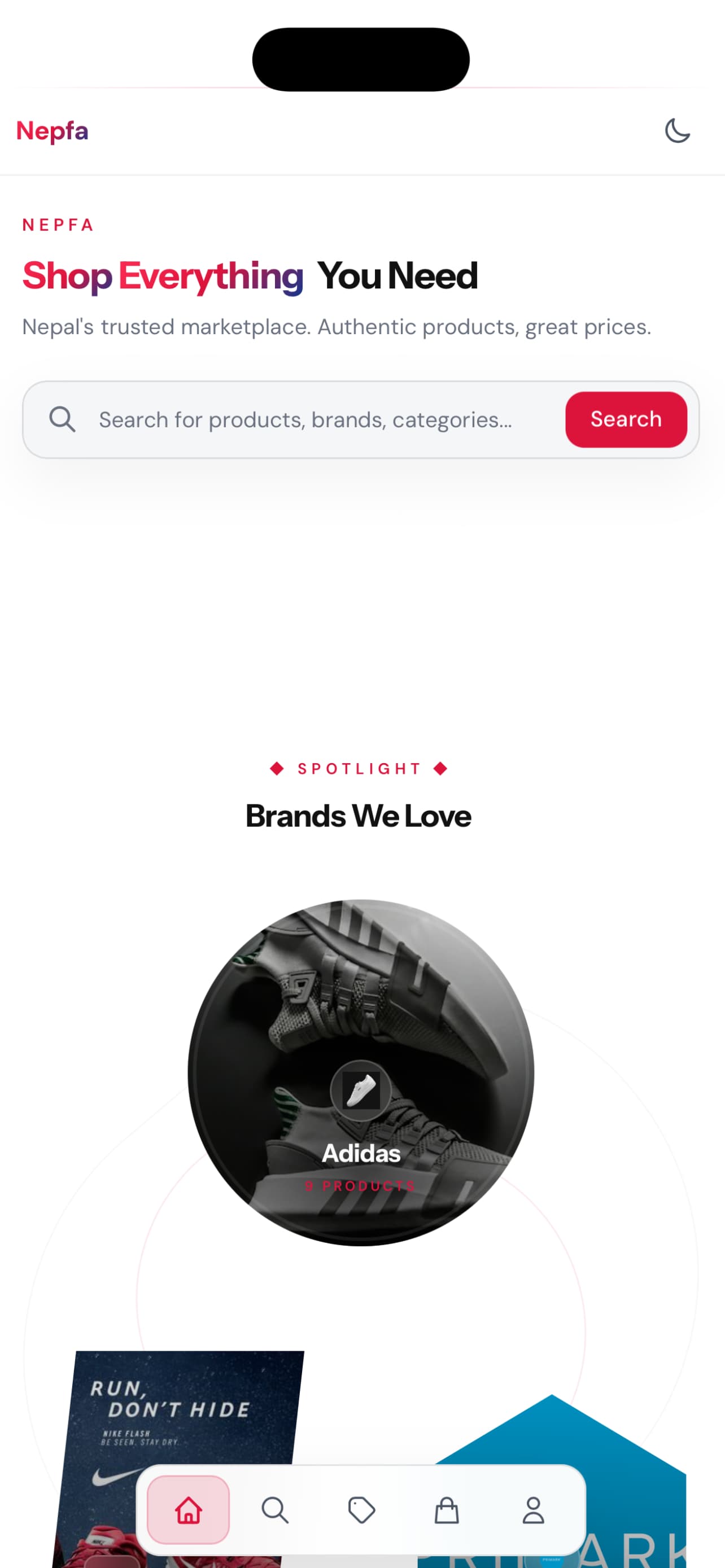
The customer-facing entry point for discovering trusted brands and products.
03 / Engineering decisions
Approach
- Model catalog, seller offers, orders, fulfillment, returns, and financial operations as explicit domains.
- Design permissions and workflows for customer, vendor, and admin responsibilities.
- Connect web, mobile, search, and cloud delivery into one product system.
04 / Tools & skills
What I used
Tools
Skills
Public product
05 / Evidence
Outcomes
- Production marketplace across customer, vendor, admin, web, and mobile surfaces.
- 99 permissions across 17 functional domains.
Public product reference: nepfa.com. Product details shown here are limited to the approved public description and resume-backed work.
06 / Reflection
What I learned
A marketplace needs canonical catalog data separated from seller-specific commercial data.
Operational workflows are part of the product, not back-office afterthoughts.